Why I’m not setting New Year's Resolutions for 2026 yet
2025 has been a challenging year!
If I had to describe 2025 in one word, it would be ‘Extremes’. It has not been a standard operating year. It has been a year of polar opposites. We have seen technology accelerate at a blinding pace, while our human capacity to process change has been tested to its limit.
For me, and for many leaders I speak to, it has been a year of sharp contrasts: record-breaking professional highs paired with personal challenges that forced us to our knees. We are nearing the finish line, not just tired, but fundamentally changed. This duality came to a head for me during November.
The High
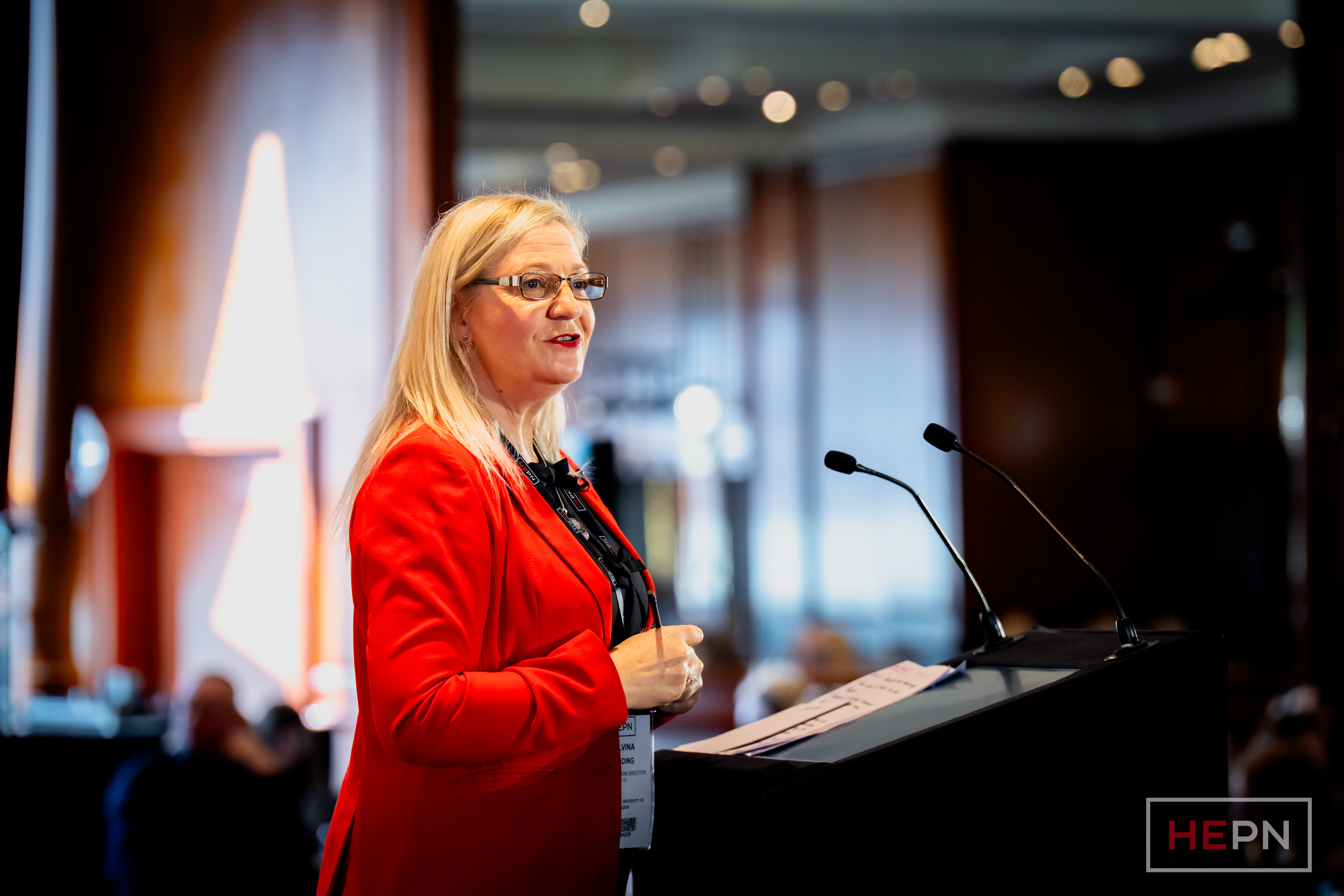
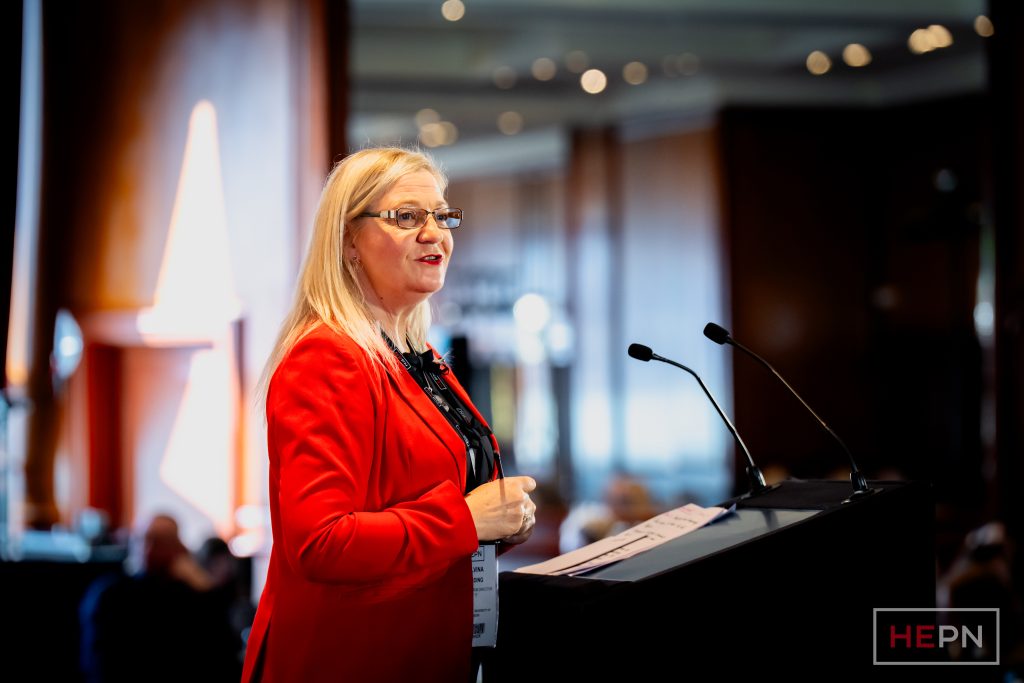
Let me set the scene. I had an amazing week. I had recorded a podcast about Cybersecurity, attended a Women in Tech Award ceremony, and spoke at the Higher Education Partners Network event on ‘Making AI Real’. A lot of time and effort went into preparing for these events, and I finally felt like all my hard work was starting to pay off.
As I stood on the stage in front of over 200 senior leaders, I was nervous. The plans had changed quite recently, and I was still writing my part of the roundtable discussion minutes before we went live. I’ve met only one other person who seems to operate this way: my mentor. We craft the final message right up until the moment of delivery.
Even when I got on stage, I had a draft, but I found myself allowing my knowledge and intuition to add the details needed in the moment. I am very passionate about the topic of AI, and the fact that there is so much noise and concern around this topic for leaders. My goal was to show the audience an alternative perspective, which encouraged them to recognise the partnership between their mastery and the AI. I wanted to show that, used wisely, it will change the way we learn and teach in the future.
So, I adapted as I went along. I used my plan but allowed myself the freedom to improvise as needed. I told them we were in a new age equivalent to the Industrial Revolution. I used the analogy of a child, from gestation through to birth, to link AI’s technical history to the launch of Gen AI. My goal was to help these leaders consider an alternative perspective: AI is not a mature master; it is a toddler, and we are its Stewards. Together we can be exceptional.
Then came the moment of truth. I handed over to the room for the first discussion topic. The silence was defining! I had a moment of panic. I frantically tried to work out what I had to say next to bridge the gap. But the silence was only a pause. Suddenly, the room erupted into conversation. The topic had landed.
The Forced Pause
But immediately following this professional high, my personal low landed. My body forced a pause on me. As I shared on the podcast earlier that week, a crisis never arrives when we are best placed to cope. For me, a family crisis simultaneously appeared while I was dealing with a health issue. In all honesty, one of these was enough. But like a lot of people, I just took one step in front of another, and it never occurred to me that I could stop.
The Collective Challenge: You Are Not Alone
I know I’m not the only one who has found 2025 more challenging than most. For me, November was a month of extremes: professional success matched by personal challenges that were, at times, too much to bear.
Over the past year, I have seen a profound shift in my network. Leaders have taken the step to show their vulnerability and share the reality of what is happening to them, whether it is professional or personal. This is the kind of leadership I try to champion with North Star Wisdom: turning up as your whole self.
But be under no illusions: this is hard work. It is not something you learn once and get right every time. Every crisis at work, every incident at home, challenges us to remain true to who we are.
To anyone who has taken that brave step to be honest, ask for help, or share their struggle:
I applaud you.
If you have worried that sharing your vulnerability would be detrimental or put you at a disadvantage, please see it through my eyes as the leader I strive to be.
I see you. Your bravery is not a weakness; it is an evolution.
The Problem: Painting Over The Mould
My logical brain, the “Fixer” identity I forged during my career, started screaming at me. It wanted me to fix the feeling of brokenness.
This brings me to the core paradox of December. As a Scottish woman, I have an annual tradition. I normally clean my house to within an inch of its life for Hogmanay. Historically, I have cleaners come in on December 31st, and I clean alongside them. It is part of my heritage: we clean out anything in our environment at the end of the year because we want to start the New Year with a clean slate.
But this year, I was reminded of a lesson I learned over the summer. I had found a patch of mould on a wall at home. It was unsightly, but more than that, it was nagging at me. It was a constant, subtle reminder that something in the environment was wrong. I realised I had a choice. I could just paint over it (the quick fix), or I could choose to treat the root cause.
There is a time and place for both approaches. But this time, the knowledge that a quick fix would mean I would have to redo the work again at some stage convinced me to fix it properly. Knowing I had identified an issue and what I wanted to do, I chose a two-stage process. First, I applied a solution to treat the mould. Only once the root cause was resolved did I redecorate.
Another Scottish tradition is to set New Year’s resolutions to start on January 1st. But I realised if I had just painted over it, my 2025 experiences would be like the quick fix of paint over the mould. At some point not within my control, they would show through. And not necessarily when I was in a position to cope with them.
My Belgian mother always told me, “Whit’s fur ye’ll no go by ye” (What’s for you won’t go by you)
This aligns with the manifestation theory of ‘Signature Frequency’ (Darryl Anka). This theory suggests that we do not need to “act as if” or force a new persona to attract what we want. We already hold the specific frequency for the life that is meant for us. We don’t need to add a new signal; we simply need to clear the static that is blocking the one we already have.
This made me face the fact that if I try to force a shiny new vision of my 2026 (The Paint) on top of the debris of 2025 (The Mould), I am blocking my own signal. My internal “room” is currently full of the debris of 2025 and previous years. Recording the podcast made me realise that even four years later, I am still carrying the weight of the Cyber Incident. If I try to layer a new vision of my life on top of this without “treating the mould” first, I am just getting in my own way. At some point, I’m still going to need to do the work properly.
The Solution: The Restoration Protocol
So, I am breaking tradition. Instead of rushing to write a list of New Year’s Resolutions and goals, I am following the exact three-step process I used on the wall.
Phase 1: Identify the Root Cause (The Diagnostic)
The first step was simply admitting the issue existed. My “Fixer” brain wanted to ignore the mould and just paint over it with a shiny new 2026.
I am now choosing to stop.
I recognised that the “forced pause” was not an interruption; it was a diagnostic signal. The “debris” of 2025 was real, and the wall was too damp to hold new paint. I acknowledged that I cannot build a new year on top of an untreated surface.
Phase 2: Find the Treatment (The Not-To-Do List)
Once I recognised the issue, I realised that I couldn’t “do” my way out of it. I had to stop adding to the pile. I replaced my standard “To-Do List” with a “Not-To-Do List” to scrub the debris away:
- No Auto-Play (The Sonic Circuit Breaker)
It is not easy to think our way out of feelings and emotions. Logic is the internal firewall that blocks us from accessing our subconscious state. But when the system is running dangerously close to capacity, you cannot just keep processing.
You need a safety switch to cut the “Auto-Play” loop. To do this, I use a Sonic Circuit Breaker. The theory is simple: music carries a frequency that trips the switch, bypassing the logic filter and speaking directly to the subconscious.
For me, this started with a fragment of a song looping in my head. My subconscious was trying to send me a signal. When I tracked down the full track, ‘I’m Not What Happened To Me’ (Good Vibes Tribe 11:11), and played it on repeat, the lyrics helped me lower my defences. It allowed me to identify that I was running dangerously close to capacity. I realised that if I didn’t pause to release the pressure now, I risked a far more significant breaking point later.
My invitation to you: Pay attention to the song that is looping in your mind. It is likely the key to what you need to hear. Find your song, play it, and let it stop the negative auto-play.
- No “Survivor” Labels
To identify as a “survivor” is to remain tethered to the past. It keeps the crisis as the central reference point of my narrative. I am choosing to untether. I am shifting my focus from the resilience of the past to the potential of the future.
For me, the realisation came when I listened to the podcast. I finally heard the specific words I was using to describe the Cyber Incident, and I realised I was still telling a war story.
My invitation to you: Pay attention to the stories about negative experiences you tell.
Try recording yourself, take a break, and then go back and listen to the recording. Be open to hearing how the story sounds to those we share it with.
If listening feels too raw, try transcribing the story. I have found that asking an AI tool to review the text for “conflict language” acts as a neutral mirror. It helps me see the war story I couldn’t hear myself.
- No Forcing
In the midst of a challenge, my old “Fixer” identity treats rest like a weakness or something I force on myself so I can keep going. But lasting solutions cannot be rushed. I am learning to respect the natural timeline of the process, trusting that the strength comes from the wait, not the haste.
Phase 3: The Curing Process (The Drying Time)
Eventually, once the issue is identified and the mould is treated, I will look at “What next?”
But I am not at that stage yet.
I am taking advantage of the festive break. In the UK, this is a natural break in the professional calendar to pause, reflect, and choose what we are going to stop or start in the new year. I am using this time to simply let the mould treatment have the time it needs. A treated wall cannot be rushed; if you paint too soon, you trap the moisture.
So, I am laying a rough plan for when I get there, but my priority right now is to step back and allow this final phase as much time as it needs.
Synthesis and Conclusion
My mindset has completely changed. This protocol, Identify, Treat, Cure, is not a delay; it is a strategic investment in my own ecosystem.
If this story resonates with you, I invite you to wait alongside me.
Check your internal room. If there is mould on the wall, it may be time to put down the paintbrush and pick up the treatment. We can enter 2026 together, not by applying quick fixes but by honouring the lasting repair.